I have been online long enough to remember when “the internet” and “the web” were different things, and when the web was genuinely a web. Pages linked to other pages and you could view the source of anything.
The internet is becoming an app
I have been online long enough to remember when “the internet“ and “the web“ were different things, and when the web was genuinely a web. Pages linked to other pages and you could view the source of anything. If you were curious enough, you could build your own corner of it and anyone, anywhere, could find it.
I have been thinking for a while that we are living through the end of that model, and I wanted to check that feeling against what researchers have found, rather than against the usual stream of commentary. What follows is my reading of the academic work; I have deliberately left out journalism and industry reports.
Generativity versus appliances
The argument starts with Jonathan Zittrain’s 2008 book The Future of the Internet and How to Stop It. His key concept is generativity; the property of a system that welcomes change from anyone, anywhere. The PC and the early internet were generative. You could run whatever you wanted, modify it, and share the result. Zittrain argued that security fears and convenience would push people towards what he called tethered appliances: iPods, iPhones, games consoles, devices that cannot easily be modified by anyone except their vendors, and which are continuously regulated from a central source. He worried about an “appliancised” future in which innovation from left field becomes impossible.
Two years later Tim Berners-Lee made a related argument in Scientific American. The web’s successful inhabitants, he wrote, had begun chipping away at its principles. Large social networking sites were walling off information their users posted. He compared these walled gardens to AOL in the 1990s and argued they can never match the diversity and innovation of the open web outside their gates, but that if one gets a tight enough hold on a market it can delay that outside growth.
Reading both now, what strikes me is how right they were about the direction and how wrong about the mechanism. Neither imagined that the appliance would be a conversation.
Platformisation and appification
By the mid 2010s media scholars had started describing the process in detail. Anne Helmond’s 2015 article The Platformization of the Web is the standard reference. She traced Facebook’s transformation from a social network site into a platform and defined platformisation as the rise of the platform as the dominant infrastructural and economic model of the social web. The key move is that platforms extend themselves into the rest of the web and push external web data to become “platform ready”. Features are decentralised outward through buttons, embeds and APIs, while the data they generate is recentralised inside the platform.
Thomas Poell, David Nieborg and José van Dijck widened that idea in 2019 into a general definition with the penetration of the infrastructures, economic processes and governmental frameworks of platforms into different sectors and spheres of life, together with the reorganisation of cultural practices around those platforms. They used app stores as their worked example.
A parallel field, app studies, has been looking at appification; the integration of daily life and activity into mobile applications, which has changed how we communicate, pay, and access information. Researchers in that tradition have used the walkthrough method to examine how app interfaces shape practice, and more recently have turned to super apps, which combine payment, messaging, mobility and commerce into a single environment. Marc Steinberg and colleagues describe super-appification as an intensified form of appification with significant political consequences, because one company ends up mediating most of daily life.
So by 2020 the academic story was reasonably settled; the web was being absorbed into platforms and apps. The browser was still there, but the important activity had moved inside closed environments with their own rules.
Chatbots replace the question
Then came late 2022. The paper I find most useful here is a working paper by Nicolas Padilla, H. Tai Lam, Anja Lambrecht and Brett Hollenbeck, from London Business School and UCLA Anderson, on the impact of LLM adoption on online behaviour. They used the Comscore web behaviour panel, which tracks desktop browsing for more than a million US users, and identified 2,041 people who started using ChatGPT, Bing Chat or Bard in the first year those tools existed.
For roughly five months after adopting a chatbot, people’s search behaviour did not change at all. Then, around week 20, traditional search fell and kept falling, settling at 21.7 percent below the pre-adoption level. The authors read the delay as a learning period; users spent months working out what the chatbot was good at and only then stopped double-checking its answers with a search.
Searches built on question words, the how, what, why and where queries, fell sharply while navigational searches, where someone types a site name to get to it, held steady. People kept using search as an address book and stopped using it to ask things.
Total browsing barely changed, but its distribution shifted. Traffic to the top 500 sites did not decline significantly. Traffic to the bottom quarter, spread across around 4.5 million small sites, fell by 41.8 percent. Display advertising exposure fell too, and the drop was concentrated among the heaviest online shoppers, which is exactly the audience advertisers pay a premium to reach.
Remember this is 2023 data, from first generation tools that invented facts freely. People built the habit anyway. The authors also note that Wikipedia appeared untouched in their data, which they attribute to its authority. Since then the Wikimedia Foundation has reported its own decline in human page views.
The pattern, in other words, is that the conversational interface did not feed the open web; it substituted for it, and the substitution hit the long tail hardest, which is the generative part Zittrain was worried about.
A web built for agents
Yingxuan Yang and seventeen co-authors, including Dawn Song and Pieter Abbeel, published a framework paper in 2025 called Agentic Web: Weaving the Next Web with AI Agents. They trace three eras – the search-centric PC web, the recommendation-driven mobile web, and an action-oriented agentic web in which agents interact with each other to plan and execute tasks on a user’s behalf. Their phrase for it is that interaction shifts from human-driven to machine-to-machine, and that intent is delegated.
A cluster of position papers goes further and argues that the web itself should change shape. One, from researchers at Mila and McGill, is titled Build the Web for Agents and argues the research community should be designing web interfaces for agents rather than forcing agents to click through interfaces built for humans. A 2026 paper argues that web agents should use typed actions supported by a semantic layer instead of clicks, keystrokes and DOM manipulation, which are brittle over long tasks. Others propose semantic component interfaces so that standard UI libraries expose tool primitives directly to agents, or argue that agents should bypass the browser entirely and call the internal APIs that sites already use.
There is also a growing security and governance literature. A paper on what the authors call web adversaries against agentic browsers shows that agentic browsers collapse the distinction between an attacker who can run scripts and one who can only place markup on a page, because text on a page can now instruct the agent. Cameron Pattison argues that the agentic web needs new normative infrastructure, partly because agents running inside authenticated browsers undermine the ability of site owners to tell agents from users.
Notice what all of this has in common; every proposal, whether from the optimists or the worriers, treats the human-readable page as a legacy format. The page is something to be wrapped, abstracted, or routed around.
Why this is significant
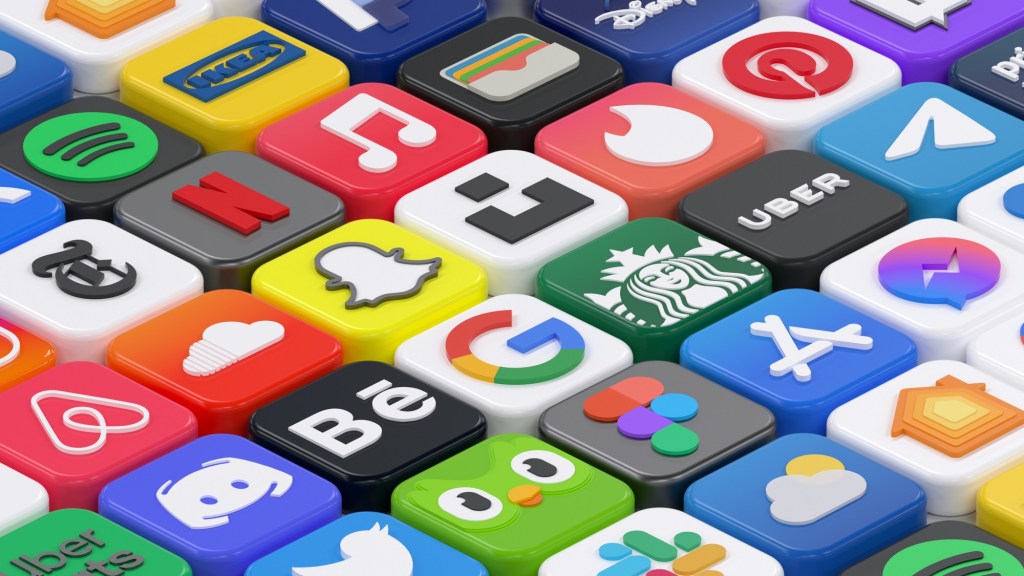
The internet is becoming an app. Not one app, but a small number of conversational, agentic environments that answer your question, act on your intent, and rarely send you anywhere. The web of pages still exists underneath, and the agents depend on it, but it is increasingly a back end rather than a destination.
Why I care as an educator
I direct computer science and data science degrees, and I teach HCI and UX. Three things follow for me:
First, the thing we are teaching students to design is changing. For twenty years the unit of design was the page or the screen. The emerging unit is the action; what a service exposes to an agent, how intent is expressed and verified, what the agent is allowed to do. The papers arguing for typed actions and semantic interfaces are, whatever else they are, a curriculum brief.
Second, the economics of the open web are being rewritten, and our graduates will work inside that rewrite. The long tail losing 42 percent of its traffic while the top 500 sites hold steady is a concentration story. If you are building something small and new, the path to being found has changed completely.
Third, this connects to something I have been writing about for a while: the shift from recall to judgement. When the interface answers for you and acts for you, the skill that matters is knowing what to ask, how to check it, and when to refuse the answer. That is exactly what I have been trying to build in our capstone students when I ask them to work as technical directors over AI tools rather than as typists.
I am not nostalgic for the web I grew up with, or not only nostalgic. The agentic layer will be extraordinarily useful, but the academics were right in 2008 that generativity is fragile, and it is worth going into the next phase with our eyes open about what is being wrapped and who holds the wrapper.
References
Berners-Lee, T. (2010). Long Live the Web: A Call for Continued Open Standards and Neutrality. Scientific American, December 2010.
Chezelles, X. H. et al. (2025). Build the Web for Agents, Not Agents for the Web. arXiv:2506.10953.
Helmond, A. (2015). The Platformization of the Web: Making Web Data Platform Ready. Social Media + Society, 1(2).
Padilla, N., Lam, H. T., Lambrecht, A. and Hollenbeck, B. (2025). The Impact of LLM Adoption on Online User Behavior. Working paper, SSRN / AEA 2026.
Pattison, C. (2026). The Agentic Web Requires New Normative Infrastructure. arXiv:2606.10711.
Poell, T., Nieborg, D. and van Dijck, J. (2019). Platformisation. Internet Policy Review, 8(4).
Position paper (2026). Web Agents Should Use Typed Actions Instead of Click-Based Browsing. arXiv:2602.17245.
Steinberg, M. et al. (2025). Using archival versions of apps to understand emerging digital ecosystems.
Yang, Y. et al. (2025). Agentic Web: Weaving the Next Web with AI Agents. arXiv:2507.21206.
Zittrain, J. (2008). The Future of the Internet and How to Stop It. Yale University Press.
WAAA! Web Adversaries Against Agentic Browsers (2026). arXiv:2605.05509.


Leave a Reply