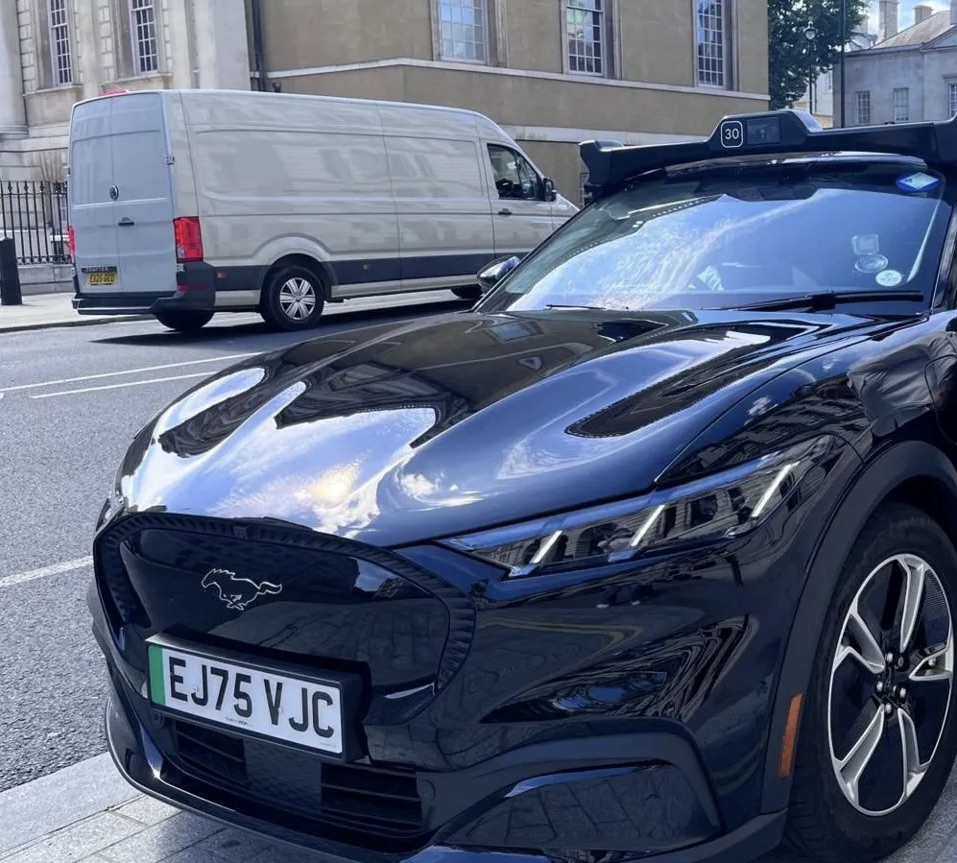
London’s busy and iconic streets are getting a major technological upgrade today. On September 3, 2026, Uber teamed up with British AI innovator Wayve to officially launch the city’s first self-driving taxi service. For Londoners calling a ride, the future is now just a tap away, though it comes with a characteristically British and cautious twist.
How the Robotaxi Experience Works
If you are expecting to hop into a fully driverless pod, you will have to wait just a little bit longer. To ensure public safety and build trust, this initial launch is a carefully supervised trial. Customers booking an UberX, Uber Electric, or Uber Comfort anywhere in Greater London, excluding airports, might find themselves matched with an autonomous ride. You are never forced into a robotaxi, though. If matched, you have the option to accept or reject the trip before the car even arrives. So far, over 140,000 Londoners have already opted in to boost their chances of getting an autonomous match.
Experiencing this new technology does not come with a premium price tag. These autonomous trips cost exactly the same as regular Uber rides, and the app will not even prompt you to tip. Unlike the fully driverless services zipping around some American cities, every London trip features a specially trained, TfL-licensed private hire driver sitting right behind the wheel. Their job is to oversee the journey and take control if needed, acting as a human safety net while the AI does the heavy lifting.
The Tech Under the Hood
The starting fleet is quite exclusive, consisting of fewer than 20 all-electric Ford Mustang Mach-E vehicles. These cars are equipped with surround sensors and are powered by the Wayve AI Driver. Wayve’s approach to autonomous driving is actually a bit different from its competitors. Instead of relying heavily on high-definition pre-mapped data or rigid rule-based systems, they utilize embodied AI. This means the system learns from experience much like a human driver would. It has been trained on real-world driving data across hundreds of cities, allowing it to dynamically adapt to new environments, unpredictable weather, and London’s notoriously challenging traffic mix of buses, cyclists, and jaywalking pedestrians.
The American Roots of Autonomy
The path to this moment has roots deeply planted in the United States, where the dream of self-driving vehicles has been evolving for over a century. American inventors were testing remote-controlled cars using radio signals on the streets of New York as early as the 1920s. Decades later in the 1980s, the US government funded the Autonomous Land Vehicle project, and universities began putting early autonomous systems on the road. The modern push truly kicked off in the early 2000s with the DARPA Grand Challenges, a series of competitions funded by the defense department that spurred incredible innovation. The success of these events inspired Google to launch its own self-driving car project in 2009, which eventually spun off into Waymo. By 2017, Waymo was testing the first commercial robotaxi services in Arizona, kicking off a race that brought giants like Tesla, Cruise, and Uber into the fold to make autonomous ride-hailing a reality.
A Cautious Approach
Europe has historically taken a more conservative approach to autonomous vehicles compared to the rapid, fully driverless deployments seen in the United States or China. Still, this launch represents a pivotal milestone for the UK’s transport sector. While regulatory barriers remain before cars can hit the streets without a human backup, government officials have championed the launch as a massive step for British innovation. For now, Uber and Wayve plan to grow the service carefully in line with rider demand, technological readiness, and evolving national regulations. Today marks the beginning of a whole new era in European mobility, moving forward one supervised mile at a time.


Leave a Reply