Are Robotaxis Actually Safer? Waymo’s New Data Might Change How You Think About Driving
Let’s be honest: humans are messy drivers. We spill our coffee, we sneak glances at our phones, we get stressed in rush-hour traffic, and we drive home exhausted after a long day at work. For years, the ultimate promise of autonomous vehicles was that they would eliminate these deeply human flaws from our roads. But promises are one thing – actual, verifiable proof is another.
According to the newest batch of safety data from Alphabet’s Waymo, that proof has arrived.
Recently highlighted by The Verge, Waymo released a massive data dump covering over 271 million driverless, rider-only miles across major US cities like Phoenix, San Francisco, and Los Angeles. To put that into perspective, that is roughly 300 human lifetimes of driving experience. The results do not just gently suggest that robotaxis are safer; they make a rather undeniable statistical case for it.
Us vs. The Machine
To really measure how well the Waymo Driver (the company’s AI system) performs, you have to compare it to the baseline of everyday human driving under the exact same conditions. When you stack the robotaxi up against us mere mortals, the AI wins by a landslide.
Over those 271 million miles, replacing human error with a vigilant algorithm resulted in:
- 82% fewer injury-causing crashes
- That is an estimated 841 real-world incidents where someone didn’t have to deal with whiplash, a hospital visit, or a wrecked car.
- 95% fewer serious crashes
- Waymo’s rate for crashes causing serious injury dropped to an astonishing 0.01 incidents per million miles, compared to the human benchmark of 0.21.
- 82% fewer airbag-deployment collisions
- Meaning severe, high-impact crashes were almost entirely engineered out of the equation.
It turns out that removing drowsiness, frustration, and distraction from the driver’s seat pays massive dividends for everyone else on the road.
Eyes in the Back (and Sides) of Its Head
If you have ever driven through a busy city center at dusk, you know the anxiety of tracking the chaos around you. A cyclist suddenly swerves out of a bike lane, a pedestrian steps off the curb in dark clothing, or a scooter darts through a blind spot.
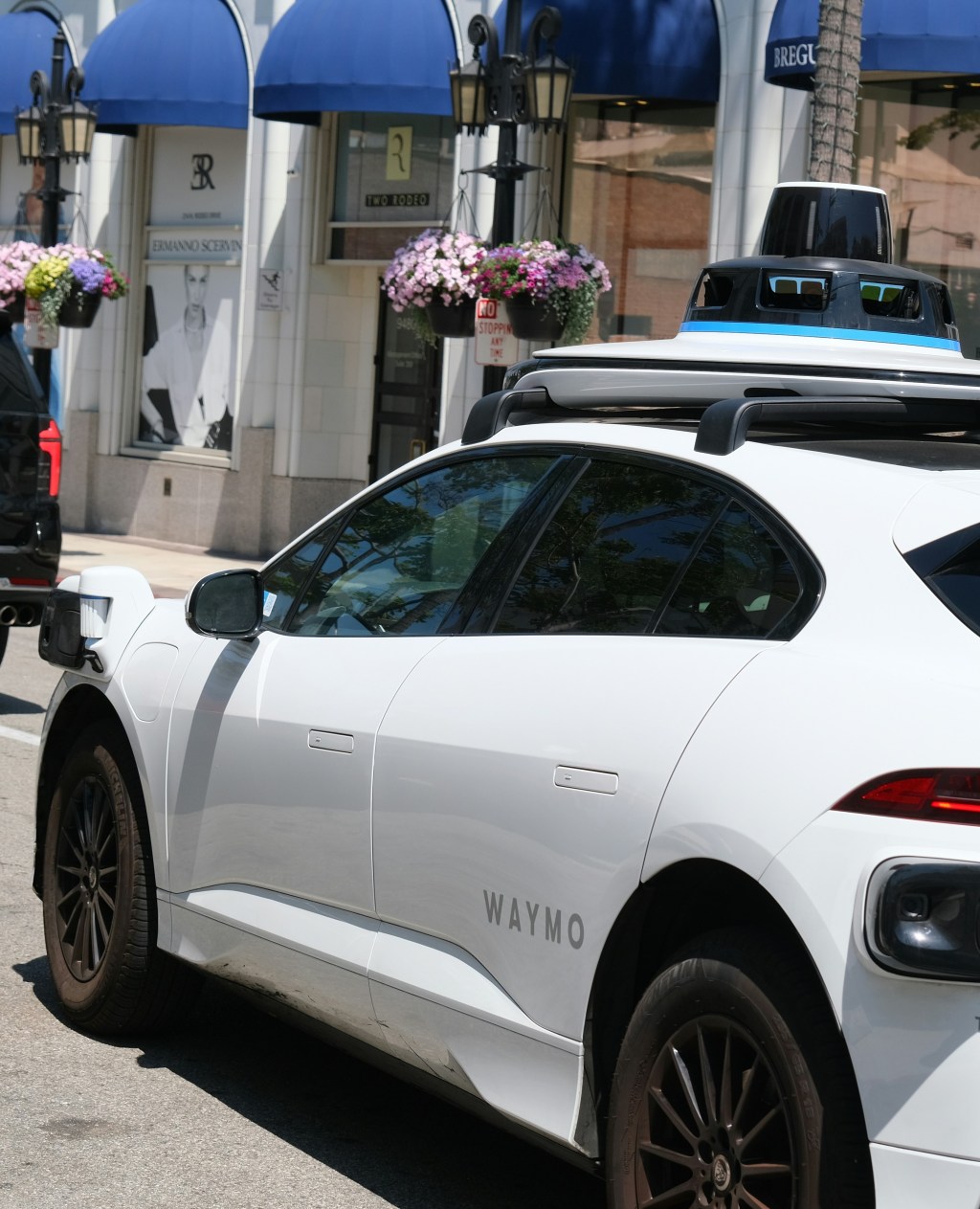
This is where autonomous tech truly flexes its muscles. While human drivers have limited fields of vision and slow reaction times, Waymo’s sensor suite processes 360-degree information from 29 cameras, radars, and lidar sensors simultaneously. It simply doesn’t have blind spots, and it never blinks.
Compared to human drivers, Waymo reported 93% fewer injury-causing crashes involving pedestrians, an 86% drop for cyclists, and an 82% drop for motorcyclists. For the most vulnerable people on our streets, these are life-saving improvements.
Bringing the Data Home to Europe
While Waymo’s self-reported numbers naturally put the company in a good light, independent studies from groups like the Insurance Institute for Highway Safety (IIHS) have largely backed up their claims.
For those of us watching from Europe, this US-based data is incredibly relevant. European regulators are currently doing the hard work of building out the legal and safety frameworks required to bring autonomous vehicles to our much older, narrower, and heavily populated streets. Policymakers have rightly demanded definitive proof that a two-ton robot won’t make our roads more dangerous.
Waymo’s transparent approach to this data is exactly what we need to see. The technology is not flawless – there will still be edge cases and awkward traffic jams caused by confused AI. But on a mile-for-mile basis, a vigilant, 360-degree robot is already proving to be a safer bet than a tired human. As this technology scales, the debate is rapidly shifting from whether we should allow robotaxis on our streets, to how fast we can get them there to start saving lives.


Leave a comment